License to Exploit: The Hidden Attack Surface Inside DRM and Activation Systems
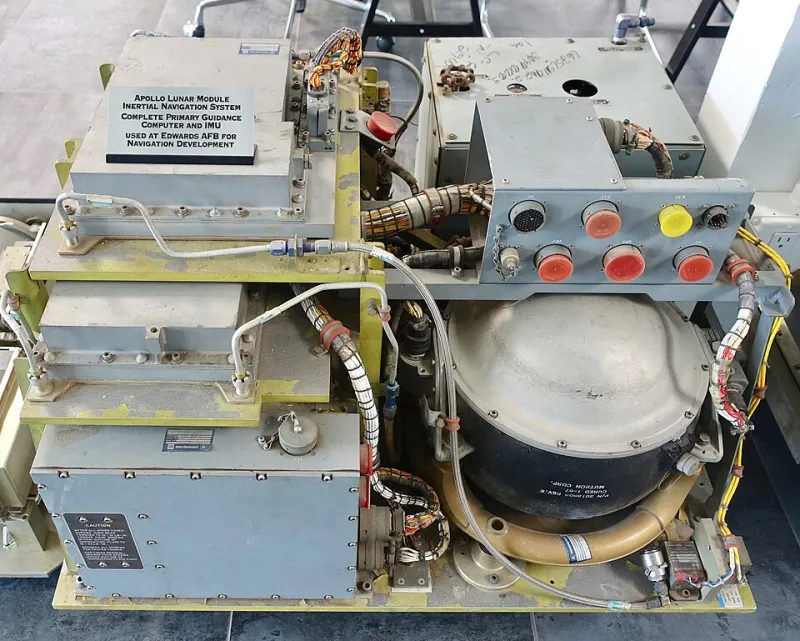
Photo: NH2501, CC BY-SA 4.0, via Wikimedia Commons
Every commercial software product carries within it a component that developers rarely write, seldom audit, and almost never treat as a security boundary: the licensing and activation system. Whether it is a third-party DRM library embedded in a AAA game title or an enterprise software activation client communicating with a vendor's license server, this infrastructure operates with significant privileges, maintains persistent network connections, and executes logic supplied almost entirely by an external vendor. For attackers who have studied these systems, that combination represents one of the most reliable entry points in the modern software stack.
The security community has spent considerable energy analyzing game cheating, enterprise credential theft, and supply chain compromise through dependency packages. Licensing systems, by contrast, receive comparatively little scrutiny despite exhibiting characteristics that should place them near the top of any threat model.
Why Licensing Systems Are Structurally Dangerous
The architectural profile of a typical licensing or DRM component creates a confluence of risk factors that are difficult to address through conventional security measures.
First, these components are almost universally supplied by third-party vendors. The developer organization integrates the component through a provided SDK or library but does not possess the source code, cannot perform a meaningful internal security audit, and has limited visibility into what the component does at runtime. Trust is extended by contract rather than by verification.
Second, licensing components frequently require elevated operating system privileges to perform their core functions. Anti-tamper DRM systems for PC games routinely install kernel-level drivers. Enterprise license managers may require administrative access to write to protected registry locations or system directories. The privilege level that enables these components to enforce licensing restrictions is the same privilege level that makes their compromise catastrophic.
Third, activation workflows by definition require network communication with external servers. A licensing component that reaches out to a vendor's activation infrastructure introduces an outbound connection that most enterprise firewalls permit without scrutiny. If the vendor's infrastructure is compromised, or if the communication channel lacks adequate integrity verification, that outbound connection becomes an inbound threat vector.
Documented Patterns of Exploitation
The history of licensing system compromises illustrates several distinct exploitation patterns that security teams should internalize.
In the gaming sector, DRM systems have been exploited not primarily to defeat copy protection — a goal that has driven a separate ecosystem of crackers — but to achieve arbitrary code execution on end-user machines. Kernel-level DRM drivers have contained vulnerabilities that privilege escalation exploits leveraged to escape sandboxed environments. A player who installs a popular game inadvertently installs a kernel driver whose vulnerability profile has been mapped by threat actors with interests far beyond software piracy.
Enterprise license server compromises present a different but equally serious pattern. When attackers gain access to a license server, they acquire the ability to push responses to every client performing an activation check. A license server that an attacker controls can serve malicious payloads disguised as routine activation responses. If the client-side licensing component does not rigorously validate the integrity and authenticity of server responses — a validation that vendor documentation frequently glosses over — the license check becomes a remote code execution channel.
A third pattern involves the exfiltration of data through licensing telemetry. Many licensing systems transmit usage data, hardware fingerprints, and environmental information back to vendor infrastructure as part of their normal operation. Developers who have not reviewed the full scope of what their embedded licensing component transmits may be unknowingly exfiltrating sensitive information about their deployment environment, their user base, or their production infrastructure configuration.
The False Confidence of Vendor Assurances
Game studios and enterprise development teams that raise security concerns about licensing components are frequently met with vendor assurances that the system has been audited, certified, or tested by a reputable third party. These assurances deserve a measured response.
Third-party security audits of commercial software components are typically scoped to specific threat models and conducted at a point in time. A component that passed an audit three years ago has not been continuously re-evaluated against the threat landscape that has evolved since. Furthermore, audit scope is negotiated between the vendor and the auditor; a vendor has commercial incentives to scope the audit narrowly, and developers who accept audit results without reviewing the scope are making trust decisions on incomplete information.
Certification programs for DRM and licensing technology similarly reflect compliance with a defined standard rather than a comprehensive assurance of security. A component can be fully compliant with an industry standard and still contain exploitable vulnerabilities that fall outside the standard's scope.
An Isolation-First Architecture for Licensing Components
Given the structural risks inherent in third-party licensing systems, the most effective mitigation strategy centers on isolation rather than trust. The goal is to limit the blast radius of a licensing component compromise so that it cannot propagate into core application logic, user data, or production infrastructure.
Treat licensing components as untrusted third-party code. The same scrutiny applied to open-source dependencies — inventory tracking, vulnerability monitoring, controlled update processes — should apply to vendor-supplied licensing libraries. This is not a reflection on vendor quality; it is an acknowledgment that any code operating within your product's privilege boundary is your security responsibility.
Isolate activation network traffic. Licensing components that require network communication should be confined to a network segment with explicit, narrow egress rules. Connections should be permitted only to the specific vendor endpoints required for activation, over documented protocols, and monitored for anomalous behavior. Broad outbound internet access for a licensing component is not architecturally necessary and should not be permitted.
Audit the data transmitted by licensing telemetry. Before deploying any licensing component, conduct a network-level analysis of what data it transmits during normal operation. If the component transmits information beyond what is necessary for license validation — hardware identifiers, file system paths, process lists, or user account information — that transmission should be treated as a security finding requiring resolution before deployment.
Establish integrity verification for activation responses. Any client-side code that processes responses from a license server should implement strict response validation, including signature verification where the vendor supports it. Responses that fail validation should be treated as a security event rather than a license denial.
Evaluate kernel-level DRM components with particular rigor. Game studios that integrate kernel-mode DRM drivers should require from their vendor a current, scoped security audit, a documented vulnerability disclosure and response process, and a commitment to timely driver updates when vulnerabilities are identified. The presence of a kernel driver in a shipped product is a significant security commitment that deserves proportionate diligence.
Reframing the Licensing System as a Security Asset
The licensing system will remain a fixture of commercial software development. Its commercial necessity is not in dispute. What is in dispute is the security posture with which development organizations approach its integration. Treating the licensing component as infrastructure rather than as a security-relevant third party has produced a pattern of avoidable compromises across both the gaming and enterprise sectors.
Security teams that extend to licensing systems the same discipline they apply to other third-party dependencies will not eliminate the risk entirely. They will, however, ensure that when a licensing component is compromised — and history suggests that some will be — the damage is contained rather than catastrophic.