Poisoned Pipelines: The Campaign to Compromise Game Studios Through Their Own Development Infrastructure
Photo: Bossarro, CC BY-SA 4.0, via Wikimedia Commons
For years, the security conversation in game development centered on the product: protecting the client from reverse engineering, defending player accounts against credential stuffing, preventing in-game economies from being manipulated by automated bots. The assumption, largely implicit, was that the development environment itself was a trusted space — internal, controlled, and fundamentally separate from the threat landscape facing the shipped game.
That assumption has become one of the most exploited misconceptions in the industry.
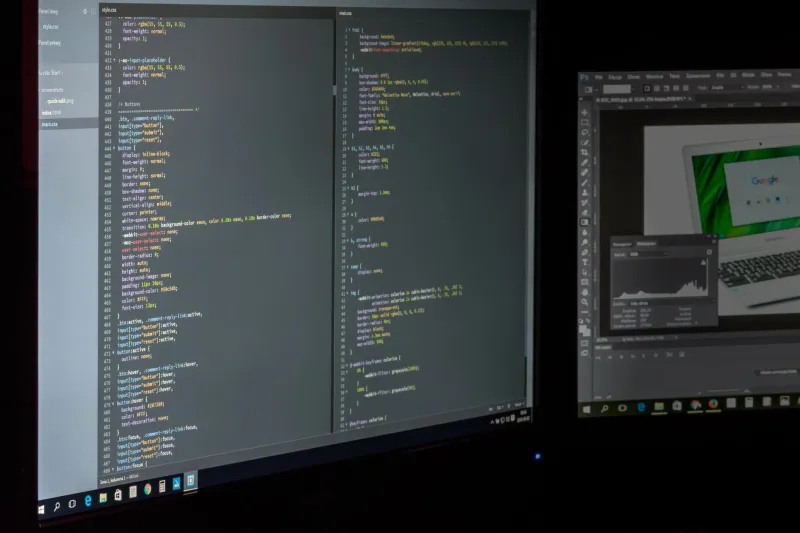
A growing body of incident data, supply chain research, and threat intelligence reporting describes a systematic campaign by sophisticated actors to compromise game studios not through their games, but through the tools used to build them. The attack surface in question encompasses integrated development environments, continuous integration and delivery pipelines, version control system integrations, artifact repositories, and deployment automation frameworks — the full constellation of infrastructure that transforms source code into a shipped product.
The appeal of this approach, from an attacker's perspective, is straightforward. Development infrastructure sits at the intersection of trusted access and minimal scrutiny. A malicious component embedded in a build system processes every line of code the studio produces. A compromised CI/CD pipeline can inject modifications into builds without touching the source repository. A backdoored IDE plugin executes with the full privileges of the developer running it, on a machine that almost certainly has access to internal repositories, build credentials, and production deployment keys.
This is not a theoretical attack surface. It is an actively exploited one.
How the Attack Landscape Has Shifted
The SolarWinds compromise in 2020 established, at scale, that build pipeline integrity was a legitimate enterprise security concern. The subsequent Codecov breach in 2021 demonstrated that the same attack vector applied to developer tooling specifically — a tampered code coverage tool silently exfiltrating environment variables, including credentials, from CI environments across thousands of organizations.
Game studios, many of which rely on the same developer tooling ecosystem as enterprise software organizations, were not insulated from these events. More targeted campaigns have followed, specifically designed for the game development context. Threat actors have demonstrated interest in proprietary game engine source code, unreleased title builds, and the internal tooling that studios develop and share across projects — all of which flows through development infrastructure before it reaches any external system.
Plugin ecosystems represent a particularly acute exposure. Game engines with extensible editor architectures — including widely used commercial and open-source engines — support third-party plugin marketplaces where developers source productivity tools, asset processing utilities, and workflow integrations. The security review processes governing these marketplaces vary enormously. A malicious or compromised plugin installed in a studio's editor environment executes within that environment with full access to the project's file system, network connections, and, in many cases, the developer's stored credentials.
Version control integrations present a related risk. Webhooks, CI triggers, and third-party integrations that connect source control platforms to external services create pathways that are configured once and rarely reviewed. A compromised integration that receives repository event notifications can access commit contents, branch structures, and, depending on the integration's permission scope, repository secrets that were never intended to be externally accessible.
The Trust Problem in Development Toolchains
What makes development infrastructure attacks particularly effective is the depth of institutional trust extended to the tools involved. A security scanner that flags suspicious network traffic from a game client will not necessarily flag identical traffic originating from a build server, because build servers are expected to communicate with external package registries, licensing services, and deployment targets. The behavioral baseline for development infrastructure is inherently permissive.
This trust is compounded by the operational culture of development teams. Engineers adopt new tools, plugins, and workflow integrations at a pace that security review processes are rarely equipped to match. A useful Gradle plugin discovered in a forum thread, a Visual Studio Code extension that automates a tedious task, a GitHub Action that simplifies deployment — these additions enter the development environment through channels that bypass the procurement and vendor assessment processes that would apply to formal software purchases.
The result is a toolchain that grows organically, accumulates trusted-but-unreviewed components over time, and presents a complex, partially invisible attack surface that neither the security team nor the development team has fully mapped.
Building a Toolchain Audit Framework
Addressing this exposure requires a structured approach to development infrastructure that most studios have not yet implemented. The following framework reflects practices observed in studios that have conducted meaningful toolchain security assessments.
Enumerate the full toolchain. This sounds obvious. It is rarely done comprehensively. The enumeration should cover not just the primary development tools — the engine, the IDE, the version control system — but every integration, plugin, extension, Action, webhook, and third-party service that touches the development environment or receives data from it. Many studios discover, during this exercise, integrations that were configured by engineers who have since left the organization and that no current employee fully understands.
Assess the permission scope of each component. Every integration, plugin, and third-party service should be evaluated for the access it holds. Does this GitHub Action require write access to the repository, or read access only? Does this IDE plugin need network access to function? Does this CI integration require access to production deployment credentials, or can it operate with a more limited scope? Privilege reduction at the toolchain level meaningfully constrains what a compromised component can accomplish.
Implement integrity verification for build artifacts. Build systems should produce and verify cryptographic signatures for build artifacts at each stage of the pipeline. A modification introduced by a compromised build tool will, if the pipeline includes integrity verification at the artifact level, produce a detectable inconsistency. This does not prevent compromise, but it substantially narrows the window in which a pipeline-level modification can go undetected.
Treat plugin and extension updates as security events. Updates to development tooling components should be reviewed before deployment in the same way that dependency updates are reviewed in production code — with attention to changelog accuracy, maintainer identity continuity, and unexpected permission scope changes. Automated tools exist to flag anomalous package behavior, and several are specifically designed for the development tooling ecosystem.
Monitor development infrastructure behavioral patterns. Build servers, CI runners, and developer workstations should be included in the organization's endpoint monitoring scope. Anomalous network connections from build infrastructure, unexpected process executions during build jobs, and access to credential stores outside of documented build processes are all detectable signals that are frequently absent from game studio monitoring configurations.
The Fortress Is the Factory
The game industry's security conversation has matured significantly in its treatment of player-facing threats. The same maturity has not yet arrived for development infrastructure, and the gap is being exploited by actors who have recognized exactly where the defenses end.
Protecting the product requires protecting the environment that produces it. The pipeline is not a trusted space exempt from adversarial consideration. It is, for a sophisticated attacker targeting a game studio's intellectual property, the most valuable and least defended surface in the entire organization.
Studios that recognize this reality and act on it will be substantially more difficult to compromise than those still operating under the assumption that the development environment is, by virtue of being internal, safe. In the current threat landscape, that assumption is not a security posture. It is an invitation.