Fractured Perimeters: How Microservice Architectures Are Turning Game Studios Into Lateral Movement Playgrounds
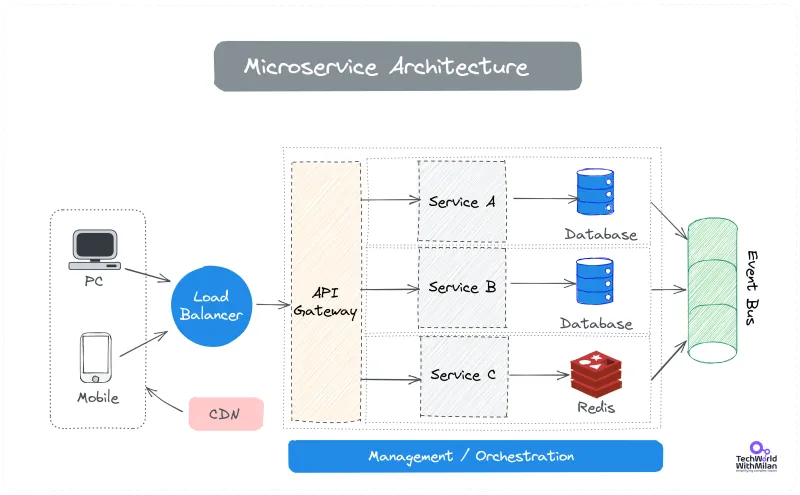
Photo: microservices container architecture network diagram cybersecurity server room, via substackcdn.com
The whiteboard diagram always looks clean. A constellation of labeled boxes — matchmaking service, player inventory service, leaderboard service, payment processor, telemetry collector — connected by arrows that suggest orderly, purposeful communication. The architecture team presents it as a model of modern engineering: loosely coupled, independently deployable, horizontally scalable. Security signs off because the services are containerized, the network is segmented, and there are API gateways at the perimeter.
What the diagram does not show is what happens after an attacker gets past the gateway. It does not show the 47 implicit trust relationships that exist between internal services because establishing mutual authentication for every inter-service call was deemed too complex during the initial build. It does not show the service accounts with cluster-wide read permissions that were provisioned for a debugging tool and never scoped down. It does not show the shared secrets embedded in environment variables across a dozen containers, any one of which, if compromised, provides access to the others.
For attackers who understand microservice environments, this is not a protected network. It is a maze with the walls removed.
Why Microservices Expand the Lateral Movement Surface
Lateral movement — the technique by which attackers who have gained an initial foothold navigate through an environment to reach higher-value targets — has always been a central concern in enterprise security. In monolithic application architectures, lateral movement opportunities were constrained by the relatively small number of distinct trust boundaries an attacker could cross. A compromised web server could reach the application tier; reaching the database required elevated credentials that were harder to obtain.
Microservice architectures change this calculus in several ways that are not immediately obvious from the design phase.
Service proliferation multiplies trust boundaries. A game studio operating a live service title might run dozens or hundreds of discrete microservices. Each service represents a potential initial access point, and each inter-service communication pathway represents a potential lateral movement vector. The attack surface grows proportionally with the service count — and in containerized environments, that count tends to increase faster than security controls can keep pace.
Inter-service authentication is frequently implicit. In a well-secured microservice environment, every service-to-service call is authenticated using short-lived credentials, mutual TLS, or a service mesh policy engine. In practice, many game studio environments rely on network-layer controls — IP allowlisting, namespace-level policies — as the primary inter-service authentication mechanism. An attacker who has compromised a container within the allowed network range can communicate with other services without presenting any credential that distinguishes them from a legitimate service caller.
Shared secrets create blast radius problems. Environment variables, Kubernetes secrets, and configuration management systems are common vectors for credential distribution in containerized environments. When secrets are shared across multiple services — a common pattern when teams are moving quickly to meet a launch deadline — a single compromised container can yield credentials that provide access to a much broader set of resources than the compromised service itself would justify.
The Architectural Decisions That Sound Secure But Aren't
Several specific patterns appear repeatedly in post-incident analyses of compromised game studio environments, and each illustrates how reasonable-sounding design decisions create lateral movement opportunities.
Namespace-level network policies without service-level authentication. Kubernetes network policies are a legitimate security control, but they operate at the namespace level, not the service level. An attacker who compromises any pod within a namespace that is allowed to communicate with the payment processing service can reach that service directly. If the payment service does not independently authenticate incoming requests, the network policy is the only barrier — and it has already been bypassed.
Sidecar proxies configured for permissive passthrough. Service meshes like Istio and Linkerd are powerful tools for enforcing inter-service authentication and encryption. They are also complex to configure correctly, and many studios deploy them in permissive mode — where the proxy is present but not enforcing mutual TLS — because strict mode breaks services that were not built with mTLS in mind. The mesh creates the appearance of security without delivering the substance.
Overprivileged service accounts for operational convenience. Game studios operating live services face significant operational pressure. When a service needs to read configuration data from multiple locations, the path of least resistance is to provision a service account with broad read access across the cluster rather than precisely scoping permissions to the specific resources the service actually needs. These overprivileged accounts become high-value targets: compromising one yields access to configuration data, secrets, and sometimes write permissions that were not intended.
Unprotected internal APIs. Microservices frequently expose internal APIs that are assumed to be inaccessible from outside the cluster. These APIs often lack the authentication requirements of external-facing endpoints, because the assumption is that only trusted internal services will ever call them. When that assumption breaks down — through a compromised container, a misconfigured ingress rule, or a supply chain compromise — the internal APIs become direct pathways to sensitive functionality.
Hardening Strategies That Address the Root Causes
Reducing lateral movement exposure in microservice environments requires addressing the architectural patterns that create the problem, not just adding controls at the perimeter.
Implement zero-trust inter-service authentication. Every service-to-service call should be authenticated using short-lived, cryptographically verifiable credentials — not network location. SPIFFE/SPIRE provides a framework for issuing workload identity certificates that can be used to authenticate service calls without relying on static secrets. Implementing this consistently is a significant investment, but it eliminates the implicit trust that makes lateral movement straightforward.
Enforce least-privilege at the service account level. Each service should operate with a service account scoped to exactly the permissions it requires — no more. This requires a disciplined permissions audit and ongoing governance to prevent scope creep as services evolve. Automated policy enforcement tools can help ensure that new service accounts do not inherit overly broad permissions by default.
Segment by sensitivity, not just by function. Network segmentation in microservice environments should reflect data sensitivity and blast radius considerations, not just functional groupings. Services that handle payment data, player authentication credentials, or anti-cheat telemetry should be isolated in segments with stricter ingress and egress controls, even if that creates additional complexity for service-to-service communication.
Instrument for lateral movement detection. Prevention controls will not catch every intrusion. Game studios should instrument their internal networks to detect the behavioral signatures of lateral movement: unusual inter-service communication patterns, service accounts accessing resources outside their normal operational scope, abnormal volumes of internal API calls. This requires investment in internal observability, but it dramatically reduces attacker dwell time when prevention fails.
Conduct adversarial architecture reviews before launch. The time to identify lateral movement risks is during the design phase, not after a breach. Adversarial architecture reviews — where security engineers explicitly attempt to map lateral movement paths through a proposed service topology — surface risks that standard security reviews miss. For studios building live service infrastructure, this investment pays for itself.
The Broader Lesson
Microservice architectures are not inherently insecure. They are architectures that require security to be designed in at every layer — authentication, authorization, secrets management, network policy, and observability — rather than bolted on at the perimeter. The studios that have successfully hardened their microservice environments share a common approach: they treat the internal network as untrusted by default, and they build the controls necessary to enforce that assumption consistently.
The studios that have not made that investment are, in many cases, operating networks that an attacker with a single foothold can traverse with surprising ease. The boxes on the whiteboard are still there. The walls between them, in practice, often are not.